

... built upon foundation of apostles and prophets...
1. Historical Foundations and Four‑Fold Ministry
The Apostolic Church of Queensland traces its beginnings to the broader nineteenth‑century movement that sought the restoration of the apostolic ministry and the renewal of the Church’s original order. Emerging from the same spiritual currents that shaped the Catholic Apostolic Church in Britain and Europe, the Queensland community developed from a conviction that God was once again calling and commissioning Apostles for the edification and preparation of the whole Church.
At the heart of this conviction lay the belief that the ministries described in Ephesians 4:11–16—Apostles, Prophets, Evangelists, and Pastors/Teachers—were not temporary offices but enduring gifts intended to remain active until the Church reached full maturity. These ministries form the four‑fold ministry, representing the divine pattern for the Church’s growth, unity, and spiritual development.
“And He gave some, apostles; and some, prophets; and some, evangelists; and some, pastors and teachers; for the perfecting of the saints, for the work of the ministry, for the edifying of the body of Christ…” — Ephesians 4:11–12
This understanding shaped the Apostolic Church’s theology: that the Church must continually be built upon the foundation laid by Christ through His Apostles and Prophets, with Jesus Himself as the chief cornerstone (Ephesians 2:20). The restoration of these ministries was therefore seen not as innovation but as continuity with the divine order established in the early Church, renewed by the Spirit for the latter days.
2. The “Latter Rain” Expectation
The restoration of the Apostle ministry, supported by prophets, was interpreted through the prophetic lens of the “latter rain”—a theological expectation drawn from Joel 2:23 and widely embraced within the apostolic revival. The “former rain” was understood as the outpouring of the Spirit and the apostolic ministry in the early Church, while the “latter rain” signified a renewed outpouring in the last days to prepare the Church for the return of Christ.
Within this framework, the rise of the Apostolic Church in Queensland and those that emerged from its missionary work were seen not merely as organisational developments but as signs of God’s eschatological purpose, restoring the fullness of the Apostle ministry, gathering the faithful into unity, and readying the Church to meet the Lord at His return.
Ephesians 2:19–22 “Now therefore ye are no more strangers and foreigners, but fellow citizens with the saints… built upon the foundation of the apostles and prophets, Jesus Christ himself being the chief corner stone…”
3. The Role of the Apostle Ministry
The Apostle Peter in Acts 1:22–26 led the election of Matthias as Apostle, demonstrating that the proclamation of the resurrection of the Lord Jesus Christ belonged, from the very beginning, to the distinctive and divinely appointed work of the Apostles, a ministry called to continue.
“Therefore, of these men who have accompanied us all the time that the Lord Jesus went in and out among us, 22 beginning from the baptism of John to that day when He was taken up from us, one of these must become a witness with us of His resurrection.” 23 And they proposed two: Joseph called Barsabas, who was surnamed Justus, and Matthias. 24 And they prayed and said, “You, O Lord, who know the hearts of all, show which of these two You have chosen 25 to take part in this ministry and apostleship from which Judas by transgression fell, that he might go to his own place.” 26 And they cast their lots, and the lot fell on Matthias. And he was numbered with the eleven apostles."
This statement indicates that the proclamation of the resurrection of the Lord Jesus Christ belonged, from the very beginning of the Christian dispensation, to the distinctive and divinely appointed work of the Apostles. It is a ministry called to continue.
Against this backdrop, The Apostolic Church of Queensland, as articulated in its catechetical text The Book of Faith, sets forth an Apostle’s authority to teach and guide in a doctrine grounded in delegated, ambassadorial authority rather than autonomous headship. The Church affirms the headship of Jesus Christ alone (Ephesians 1:22–23; 5:23; Colossians 1:18), positioning the Apostle office as an ambassadorial, mediating, and representative servant of Jesus Christ.
4. Threefold Apostolic Authority
Within this framework, three distinct kinds of authority are attributed to the Apostle’s ministry—understood as gifts entrusted for the sake of others rather than powers held for their own sake:
1. Authority to speak in the name of Christ
(Matthew 10:40; John 20:21)
2. Authority to proclaim forgiveness and remission of sins
(Matthew 18:18)
3. Authority to impart the gifts of the Holy Spirit through Holy Sealing
(Acts 8:5, 25; 19:1, 6)
This rite of Holy Sealing is reserved for the apostolic office, distinguishing it from the ministries of evangelists or elders. The text also places the apostolic role within the Great Commission (Matthew 28:19–20) and identifies Apostles as those responsible for laying the Church’s doctrinal foundation (Ephesians 2:20; 1 Corinthians 12:28).
Importantly, the doctrine guards against any sense of apostolic infallibility or exceptionalism: Apostles are described not as “super-human” or “infallible,” but as humble servants, assistants who lead believers to the joy of the gospel rather than masters over the faith of the Church.
5. The “Great Testimony”
One of the greater early documents authored by the Apostles was The Great Testimony, distributed to religious leaders and rulers of Christian nations, including the Austrian Emperor. In this writing, they commented on the decline of Church and State and proposed a structure modelled on the early Christian Church—built upon the foundation of Apostles and Prophets, Jesus Christ Himself being the chief cornerstone (Ephesians 2:20).
Excerpt (Roßteuscher’s translation, 1886) “To the patriarchs, archbishops, bishops, and other leaders of the Church of Christ in all lands… The Church of Christ is the community of all, without distinction of time or country, who are baptized in the name of the Father and of the Son and of the Holy Spirit…”
6. Apostolic Continuity and Mission
The first Christian churches “continued steadfastly in the apostles’ doctrine and fellowship, and in breaking of bread, and in prayers” (Acts 2:42). A Christian community is not merely a gathering of like-minded people but a living body with common purpose (1 Corinthians 12:12–28).
With the founders of the re-established Apostolic Church, the Apostles of the Catholic Apostolic Church, the apostolic church of queensland continues to profess that:
“The Church of Christ is the fellowship of all people, irrespective of time and nation, who are baptized in the name of the Father, and of the Son, and of the Holy Ghost…” (The Apostolic Witness, 1836)
To preach the resurrection of the Church and press the Church toward it will be the work and mark of Apostles in the end times. The ministry that laid the foundation of teaching must also bear witness of the resurrection of the Church and proclaim the Lord’s coming in glory.
7. The Apostolic Ministry Today
The Apostolic Ministry, breathed into life by the Lord Jesus Christ for His flock, was taken up by the young Christian community and developed into a beneficial apostolic service, one that persists and remains of profound significance for the spiritual life of the Apostolic Church.
It must remain the sacred and responsible duty of all Apostles to measure their service to God and humanity by the example of the Lord Jesus Christ and to be guided by Him alone. Thus, the Apostles, and indeed the Church itself, see their ministry as a selfless service to all people, based on the principles of the Gospel and the call of Christ (Matthew 28:18–20; John 20:19–23).
Only the image of Jesus Christ and the fruits of the Holy Spirit should be allowed to develop through apostolic service in the Church. As the worldwide Church has not yet attained “the stature of the fullness of Christ” (Ephesians 4:13), all ministries remain needed within the Church.
Catholic Apostolic Church
(from extreme left, clockwise around the table)
Henry Hilton, Henry Drummond, John Tudor,
Henry King‑Church, Frank Sitwell, William Dow,
Thomas Carlyle, Francis V. Woodhouse,
Spencer Perceval, Nicholas Armstrong, John Bate Cardale.

Apostolic History Network Association

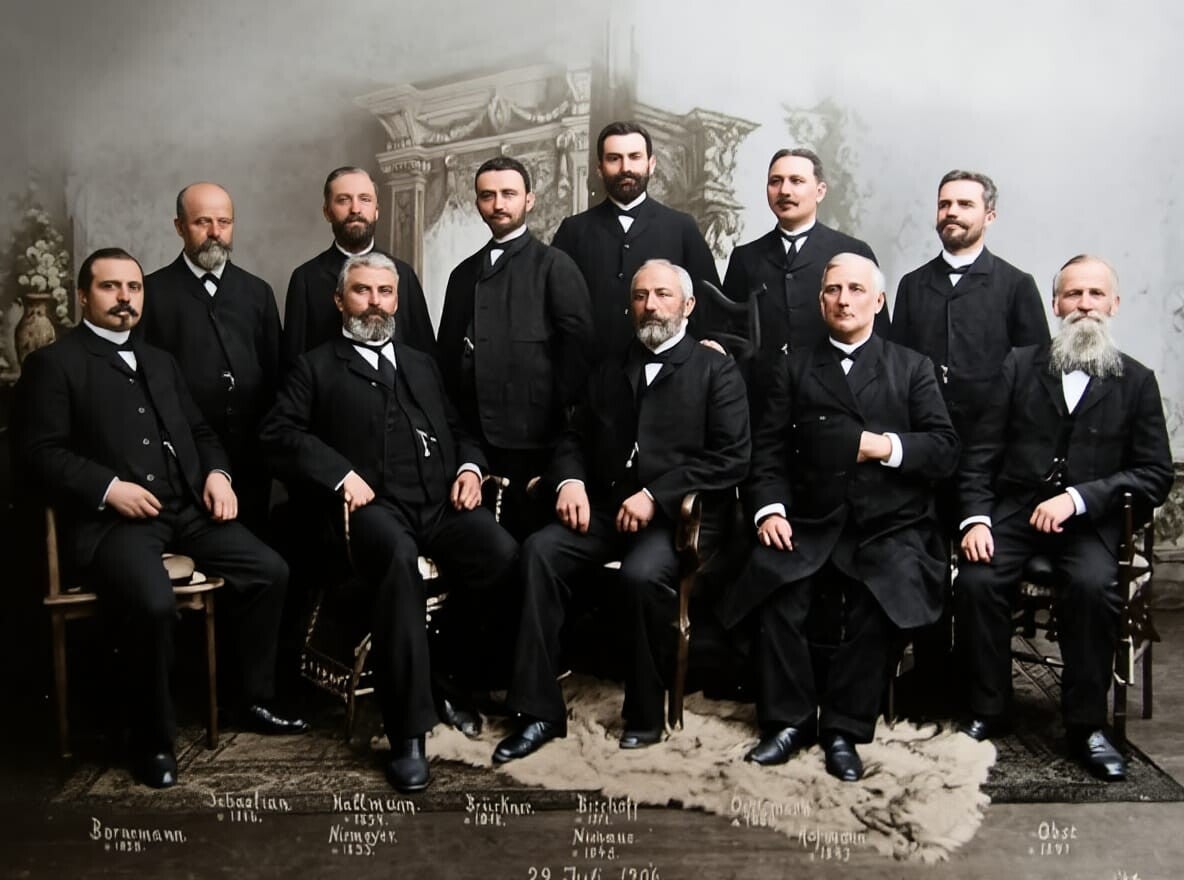
apostle h.f. niemeyer visit to germany in 1906
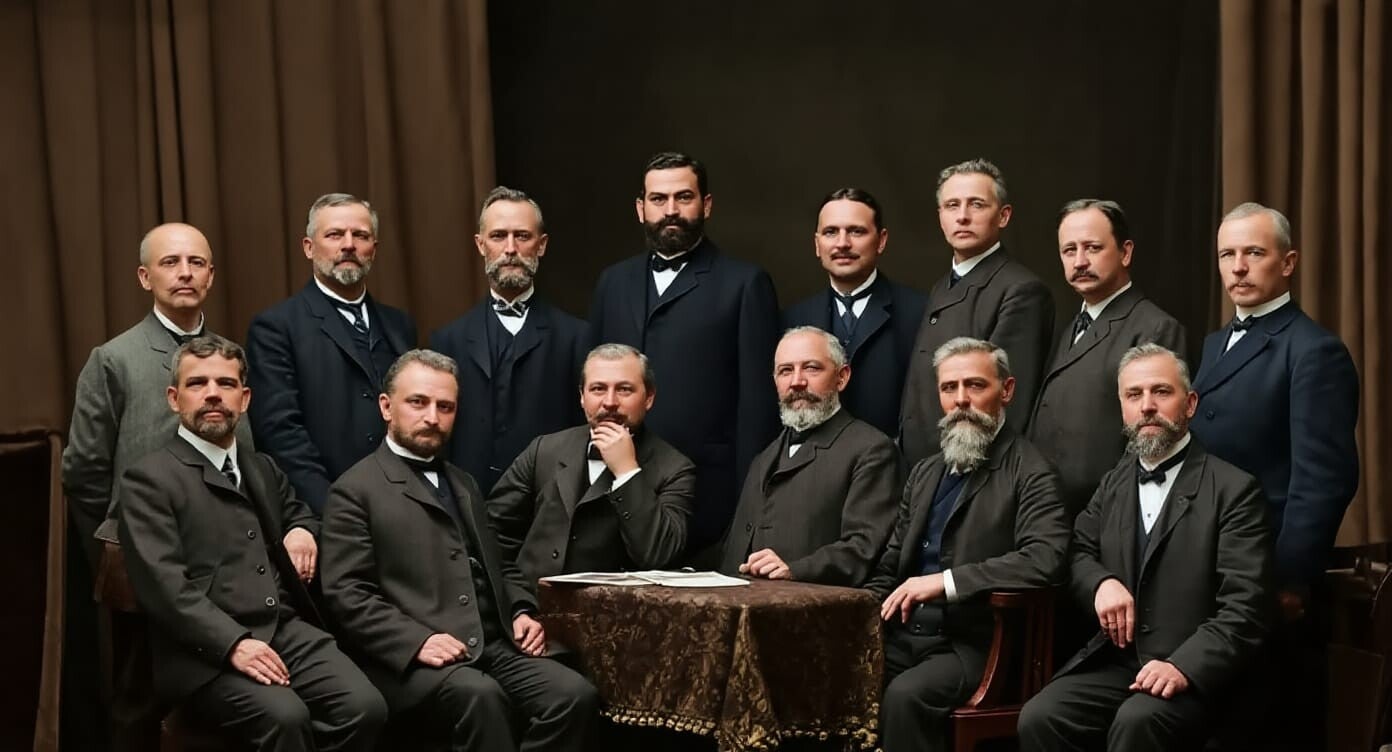
apostle C.G. Klibbe (seated second from the right) visit to germany in 1908.
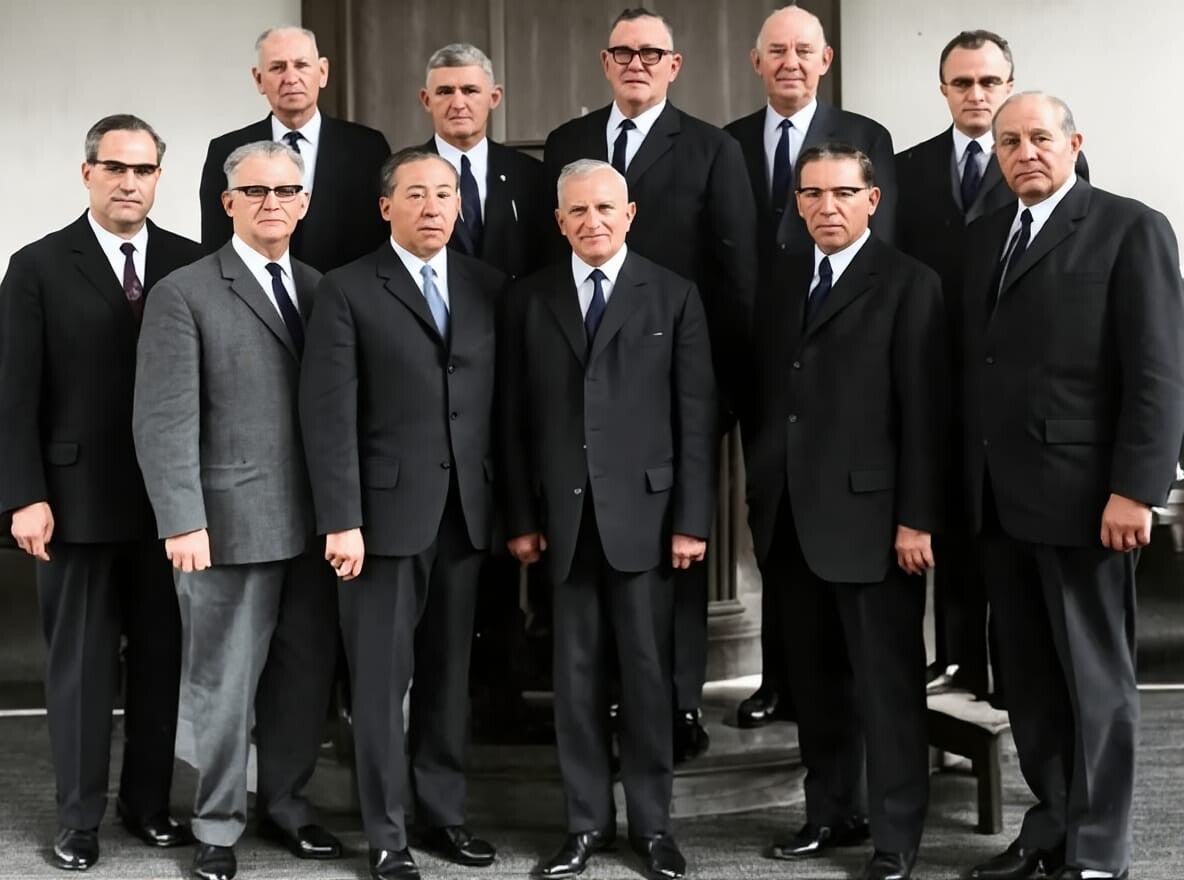
Stories told in pixels
In 1968, Apostle A. Niemeyer and Apostle A. E. Zielke travelled to Düsseldorf, Germany, where the Apostles of the “Apostle Unity” of the Apostolic Church met together for the first time. This gathering marked a significant moment of fellowship and cooperation among Apostles from various regions, affirming their shared commitment to unity in doctrine, ministry, and mission within the Apostolic tradition.